Ripped Ridge Vent Sealing Columbus GA | Wind Damage Repair
Re-anchoring continuous ridge vents torn by Chattahoochee wind gusts and sealing attic exhaust slots against wind-driven rain penetration.
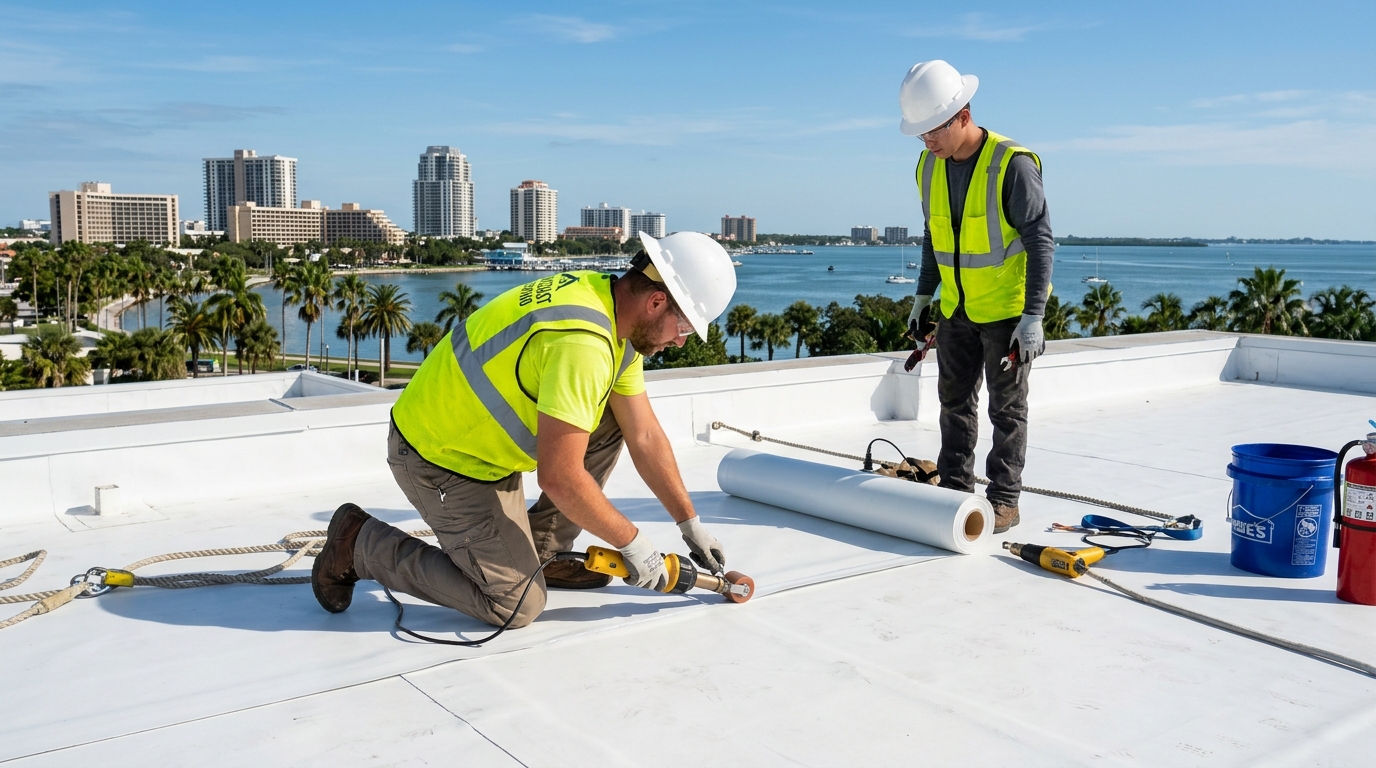
Ridge Exhaust Vent Storm Damage Remediation
Continuous ridge vents installed along horizontal roof peaks provide vital attic exhaust ventilation. However, when severe thunderstorm microbursts cross the Chattahoochee River, high-velocity wind shear creates extreme negative aerodynamic lift directly over the ridge. This force can pull fasteners from underlying rafters, lifting the plastic or aluminum vent baffle several inches off the roof.
Once a ridge vent is loosened, subsequent gusts blow horizontal rain straight into the open 2-inch attic cut slot, causing immediate ceiling sheetrock collapse in upper-floor rooms. Dispatched roofing contractors reseat loosened vent sections, install longer ring-shank gasketed screws directly into structural framing lumber, seal vent end-plugs, and replace damaged hip and ridge cap shingles.
Key Technical Engineering Protocols:
- ✓ Structural re-anchoring of continuous ridge vents using ring-shank screws.
- ✓ Watertight end-plug sealing and baffle weatherproofing against wind-driven rain.
- ✓ Installation of high-wind rated hip and ridge cap shingles along roof peaks.
Columbus Ridge Vent Sealing In Columbus? Connect Now
Do not wait for active water infiltration to compromise rafters, sub-fascia, and ceiling drywall. Our Columbus dispatch team connects you immediately with licensed, insured local roofing contractors equipped for rapid mitigation.
Call Dispatch: (888) 208‑41551. Chattahoochee Valley Fall Line Microclimate & Convective Thunderstorm Dynamics
Columbus, Georgia straddles the dramatic Fall Line where the rocky Piedmont foothills transition into the flat Upper Coastal Plain along the Chattahoochee River basin. This distinct topographical boundary creates unique microclimatic friction. During late spring, summer, and transitional autumn months, warm moist maritime air flowing northward from the Gulf of Mexico collides with denser inland air masses, generating violent convective thunderstorms, intense localized downbursts, and severe straight-line wind gusts exceeding 65 to 80 mph across Muscogee, Harris, and Russell counties.
These high-velocity Chattahoochee storm fronts generate extreme negative aerodynamic pressure over residential roof ridges and eaves. Standard laminated architectural shingles experience repeated cyclic tab flexure, which fractures aged factory thermal sealant strips. Once the adhesive bond breaks, subsequent wind gusts lift individual shingle tabs, driving horizontal sheets of rain underneath the underlayment and exposing raw plywood or OSB decking to immediate saturation and structural delamination.
- Severe Thunderstorm Microbursts: Localized 70+ mph wind shear lifting unsealed shingle tabs along exposed ridges and rakes.
- Hail Impact Bruising: Sub-surface fiberglass mat fractures that cause chronic asphalt granule loss and premature UV degradation.
- Loblolly Pine Branch Punctures: Heavy pine and southern red oak limbs puncturing decking during nocturnal squall lines.
- Valley & Chimney Water Inundation: Heavy downpours overwhelming rusted valley pans, deteriorated step flashing, and masonry crickets.
- Low-Slope Porch Transition Seam Failures: Standing water pooling at architectural slope transitions on residential additions.
2. Non-Destructive Moisture Diagnostics & Attic Thermal Tracing
Accurately determining where water is penetrating a roof envelope requires advanced diagnostic instrumentation. In multi-slope residential construction across Columbus, Midland, and Fort Moore, rainwater entering through a torn ridge vent or cracked plumbing boot rarely falls straight down into the room below. Instead, water tracks horizontally along sloped rafter lumber, travels across electrical conduits, and pools in low spots on ceiling drywall dozens of feet away from the initial exterior breach.
Dispatched emergency roofing technicians utilize calibrated FLIR (Forward-Looking Infrared) thermal imaging sensors paired with non-invasive dielectric radio-frequency moisture meters. Because wet framing lumber and soaked insulation retain cold evaporative signatures, infrared cameras clearly reveal the hidden pathway of water behind ceiling sheetrock and inside attic cavities without destructive cutting. This ensures emergency containment covers the true point of exterior failure.
- Thermal Differential Analysis: Mapping wet insulation patterns using high-sensitivity infrared thermal imaging.
- Deep-Probe Moisture Metering: Verifying substrate moisture content in structural rafters and plywood sub-decking.
- Roof Penetration Survey: Inspecting plumbing vents, skylight curbs, and chimney saddles for gasket dry-rot and sealant separation.
- Attic Ventilation Audit: Checking intake soffits and ridge exhausts for storm water backdrafting during high-pressure squalls.
3. Step-by-Step Substrate Restoration & Emergency Containment
Emergency roof mitigation must be conducted according to strict engineering principles to prevent secondary property loss. Dispatched crews follow a systematic 4-phase protocol:
- Structural Triage & Hazard Containment: The responding crew evaluates roof deck stability from ground and attic levels before ascending. If tree impact or structural sagging is present, temporary interior shoring or remote stabilization is prioritized.
- Commercial Timber-Batten Tarping: Exposed decking and missing shingle sections are wrapped with heavy-duty 12-mil woven poly tarps. Rather than relying on sandbags or face nails that rip under wind, tarps are secured using dimensional 1x2 wood batten strips screwed securely into underlying structural rafters over the ridge.
- Flashing & Valley Water Diversion: Temporary elastomeric sealant collars and secondary membrane barriers are installed around leaking chimney flashings, vent pipe boots, and valley pans to channel rainwater safely toward gutters.
- Comprehensive Photographic Documentation: Crews take high-resolution date-stamped photographs of storm uplift, wind-torn shingles, hail bruising, and emergency mitigation measures for insurance adjuster review.
*Note: Emergency tarping and sealing provide temporary stabilization to prevent interior inundation. Permanent repairs require full substrate drying and code-compliant shingle or flashing replacement.
4. Muscogee County Codes, Historic Preservation & Contractor Standards
In the consolidated government of Columbus-Muscogee County, permanent roofing repairs and re-roofing projects must adhere strictly to the Georgia State Minimum Standard One and Two Family Dwelling Code (IRC with Georgia Amendments). This requires enhanced high-wind fastening schedules (6 nails per shingle tab in designated wind zones), approved drip edge installation along eaves and rakes, and code-mandated ice and water protective underlayment along critical valley intersections and roof penetrations.
Properties located within Columbus's historic districts—including the Columbus Historic District, Highside, and Weracoba/St. Elmo—fall under municipal Board of Historic and Architectural Review guidelines. When historic slate, standing seam tin, or cedar shakes are damaged by storms, emergency stabilization must preserve original fabric while permanent repairs require matching historic profiles and materials. RoofExpertUSA routes callers to independent contractors familiar with local municipal codes and historic guidelines across Georgia and eastern Alabama.
- Georgia State Licensing: Permanent structural repairs handled by independent contractors licensed with the Georgia State Licensing Board for Residential and General Contractors.
- Muscogee County Building Inspections: Re-roofing permits and deck inspections coordinated through the Columbus Inspections and Code Department.
- Historic District Preservation: Matching profiles and compatible materials for properties in Landmark and Historic overlay zones.
- Cross-River Alabama Compliance: Dispatched contractors serving Phenix City and Smiths Station hold valid Alabama Home Builders Licensure (HBLB).
5. Seasonal Chattahoochee Basin Storm Preparedness & Maintenance
Given the intense heat, heavy canopy cover, and frequent severe thunderstorms of the Chattahoochee Valley, proactive roof maintenance is critical for preventing sudden ceiling leaks. Columbus homeowners should schedule professional semi-annual inspections—ideally in late winter before spring convective storms strike, and again in late autumn following the peak hurricane tropical moisture season.
Clearing pine needle accumulations from valley pans, ensuring gutter downspouts discharge freely away from foundations, and trimming heavy pine and oak branches at least 10 feet back from roof planes dramatically reduces puncture hazards during severe squall lines. Dispatched roofing technicians can perform preventative tab seal audits and seal pipe collars before torrential downpours breach interior ceilings.
- Pine Needle & Oak Debris Removal: Clear roof valleys and hidden crickets where trapped pine needles hold moisture and cause rot.
- Tree Canopy Clearance: Cut back overhanging tree branches to prevent impact gouges and attic punctures.
- Pipe Boot Collar Inspection: Inspect rubber gaskets around plumbing vent stacks for sun-baking and thermal split damage.
- Ridge Vent Fastener Audit: Verify continuous ridge vents are tightly anchored against high-wind uplift.